Thadri is one of the Sindhi festivals in which the kitchen itself becomes part of the ritual. Observed during the monsoon and associated with Sitala Mata, it is remembered as a day when food is prepared in advance and enjoyed the following day. The practice gives the festival its distinctive sense of patience: cooking happens before the celebration, the stove is kept quiet on the day, and the family sits down to food that has rested, settled and gathered the flavours of the previous evening.
The festival has also been described in family traditions through the worship of Jog Maya. Names and details can vary between families and regions, so Thadri is best understood as a living tradition rather than a single fixed menu. What remains common is the attention paid to cooling foods, advance preparation, cleanliness, prayer and the sharing of dishes with relatives. The festival sits within the seasonal rhythm of the monsoon, when the weather changes, the home kitchen becomes especially important and food safety and careful storage matter.
Preparing for Thadri is a family exercise. Doughs are kneaded, vegetables are cleaned, sweets are shaped and savouries are cooked before the festival day. The work often moves between generations: an elder remembers the texture of a Mitho Lolo, someone else prepares the masala for a dry sabzi, and children learn the names of dishes by watching the table come together. In some homes, special food is sent to married daughters or shared with neighbours, turning a household meal into a gesture of affection.
Mitho Lolo is among the best-known Thadri foods. It is a sweet, thick wheat flatbread made with sugar, ghee and cardamom, and it can be eaten with dry cooked vegetables. Its soft sweetness makes it festive without being complicated. Besan Ji Koki brings a savoury contrast: gram flour, spices and the familiar koki shape come together in a filling flatbread that feels both practical and celebratory. Chotha, also called a meethi tikki in some video titles, adds another crisp and sweet element to the spread.
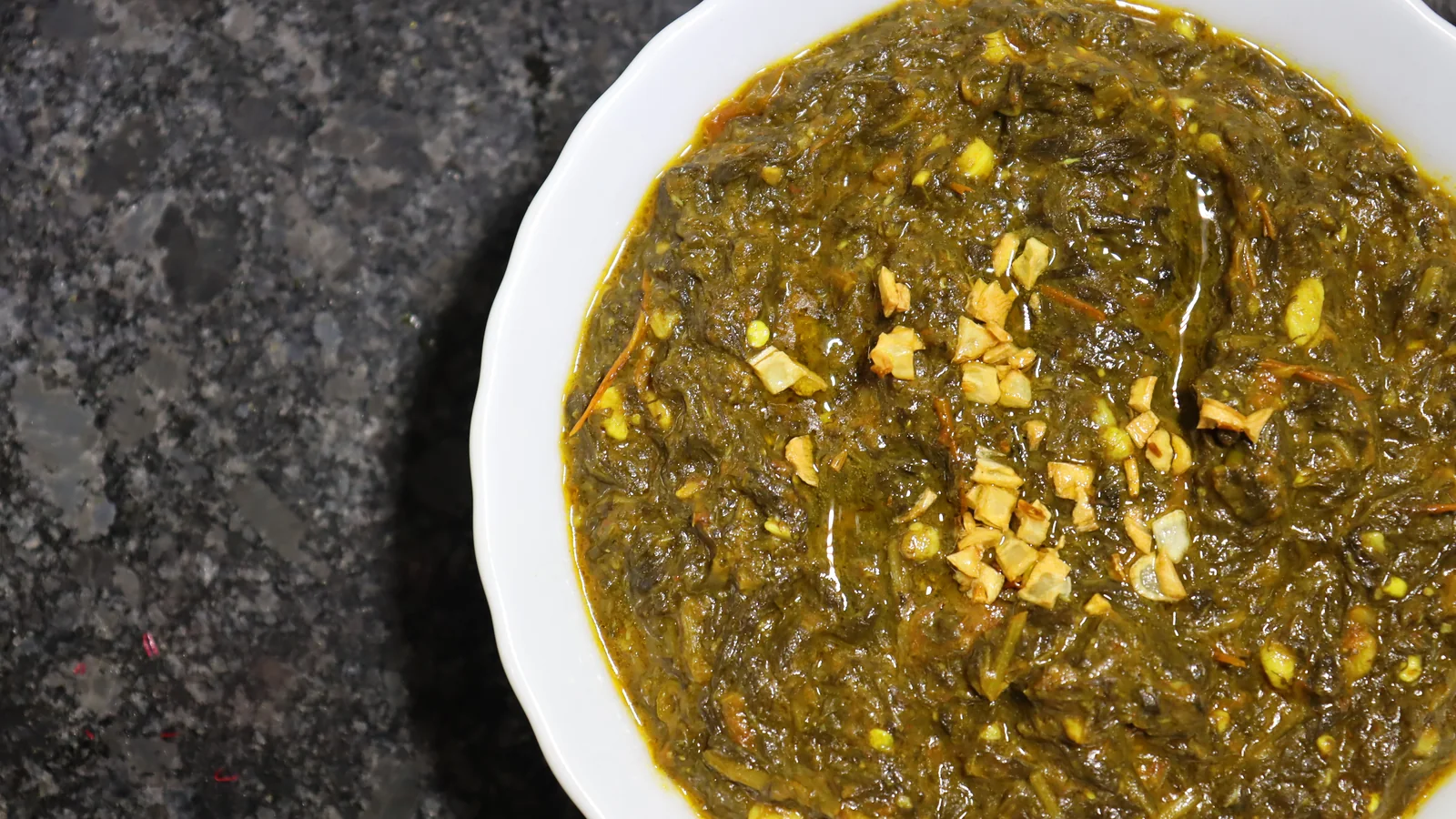
The savoury dishes are just as important. Nijji Palak, a garlic-rich spinach preparation, is closely associated with the Thadri tradition in the shared Sindh Ji Rasoi cookbook. Garlic, cumin, green chilli and spinach create a dish with a strong aroma and a deep, earthy taste. Tawa Sabzi brings together vegetables cooked with masala, while Arbi Tuk offers the crisp texture that makes a festival table feel abundant. Dahi Vada adds softness and coolness, and Mirch Pakoda brings the familiar pleasure of a hot, spiced fritter prepared ahead of time.
Stuffed karela shows another side of Sindhi cooking: the ability to turn a challenging ingredient into something deeply loved. Bitter gourd is balanced with garlic and masala, and the slow preparation gives the dish time to become mellow. These foods are not identical in every home. Some families add papad, potatoes, bhindi, dry beans or other seasonal vegetables. The details are part of the family record, and the menu can be adapted to what is available and what a household traditionally cooks.
Thadri also teaches a useful kitchen value: plan the meal before you begin. Since the food is cooked in advance, ingredients must be selected carefully, dishes must be finished properly and leftovers must be stored safely. Dry preparations, breads and sweets often hold particularly well, while dairy-based dishes need thoughtful handling. The old practice can therefore be read both as a ritual and as a lesson in kitchen organisation, mindful cooking and respect for food.
The emotional centre of Thadri is the table. A family may remember the festival through the smell of roasted flour, the sound of a pressure cooker the previous evening, the sight of Mitho Lolo being packed for a daughter or the taste of Nijji Palak eaten without reheating. Food becomes an archive of relationships. It tells younger family members what their grandparents valued, what their mothers cooked and how a tradition travelled from Sindh into homes across India and the wider diaspora.
At Sindh Ji Rasoi, these videos are presented in the Sindhi language so that the recipes and the language of the kitchen can travel together. The English page is here to make the history, rituals and food easier to discover, while the original videos remain the practical reference for watching Vishaka prepare the dishes. Thadri is therefore both a festival page and an invitation: cook with care, ask an elder about the family version, share the food and keep the story moving forward.